
Foot discomfort may hinder a person’s regular activities, including walking, exercising, and even standing for an extended period of time. While many people are familiar with the common type of bunion affecting the first toe, fewer are aware of the second type, also known as tailor’s bunion. This type of bunion is characterized by the protrusion of the fifth toe bone on the outside of the foot.
The reason for the unusual name is tied to the occupation of tailors, who were among the first people to suffer from this condition. Sitting cross-legged for long periods of time put tailors at greater risk of developing a bone growth near the little toe. A tailor’s bunion may occur in anyone, as the cause of this type of bunion is multifactorial, including genetic predispositions, foot shape, and footwear pressure.
While some people may only notice a bump near the little toe without any uncomfortable sensations, others may experience painful sensations, redness, irritation, and shoeing difficulties. Understanding the causes and treatment options for a tailor’s bunion is essential in preventing the development of this condition. You can also explore our foot health guides for more tips on preventing common foot problems.
What Is a Tailor’s Bunion?
A tailor’s bunion, also known as a bunionette, is a bony bump that forms on the outside of the foot at the joint of the fifth metatarsal bone.
- The fifth metatarsal normally runs straight to the little toe. In a person who has a tailor’s bunion, this metatarsal bone often angles outwards while the little toe may angle inwards.
- This creates a bump on the outside of the foot.
- It is similar to a bunion, but it occurs on the opposite side of the foot.
- A bunion occurs where the big toe meets the foot, while a tailor’s bunion occurs on the outside of the foot at the joint of the little toe.
- The bump can range in size.
- The bigger the bump is, the more pressure is put on the area, causing discomfort. However, not all bumps are painful.
Some people have a bump that is barely noticeable, while others have a bump that is very uncomfortable.
What Causes a Tailor’s Bunion?
A tailor’s bunion is typically caused by a combination of genetic and acquired factors that contribute to the development of this foot condition.
Genetic and Anatomical Factors
One of the key contributors to tailor’s bunion formation is the anatomical structure of the foot. Some people may have a broader forefoot, an abnormally shaped fifth metatarsal bone or another irregularity that places increased pressure on certain joints and tissues.
Those who have a family history of bunions or irregular foot structures are commonly more likely to develop similar deformities themselves.
Acquired Causes
While some people are predisposed to developing tailor’s bunions due to their foot structure, the condition may also be acquired.
Wearing tight-fitting or ill-fitting shoes can commonly irritate the affected area and lead to painful inflammation of the bony prominence.
Narrow, constricting, and uncomfortable shoes are some of the most common reasons why tailor’s bunions are acquired. They can also aggravate an existing foot deformity, placing additional pressure on the protruding part of the bone.
Repeated Foot Stress
Monitoring your progress by keeping all scheduled appointments. People who are on their feet a lot or are very active are more likely to be uncomfortable after engaging in these activities
Foot Alignment Problems
Issues with the way the foot moves while walking can change pressure distribution. Over time, abnormal pressure patterns may increase stress around the little toe joint.
Common Symptoms of a Tailor’s Bunion
Symptoms of Tailor’s Bunions
The symptoms vary depending on the stage of the disease and the level of pressure applied to the affected area.
The most common signs of the deformity are:
- swelling
- a visible bump on the outer side of the foot near the little toe
- tenderness and pain around the fifth toe joint
- redness and irritation
- dryness or thickened skin due to friction from shoes
- inability to wear certain types of shoes
- hot, burning sensations
Some people may only notice the signs after putting pressure on their feet, for example, as a result of intense physical activity. Others may feel discomfort even at the slightest movement. Symptoms usually get worse from constant rubbing of the shoes and activities that put extra pressure on the back of the foot.
How Is a Tailor’s Bunion Diagnosed?
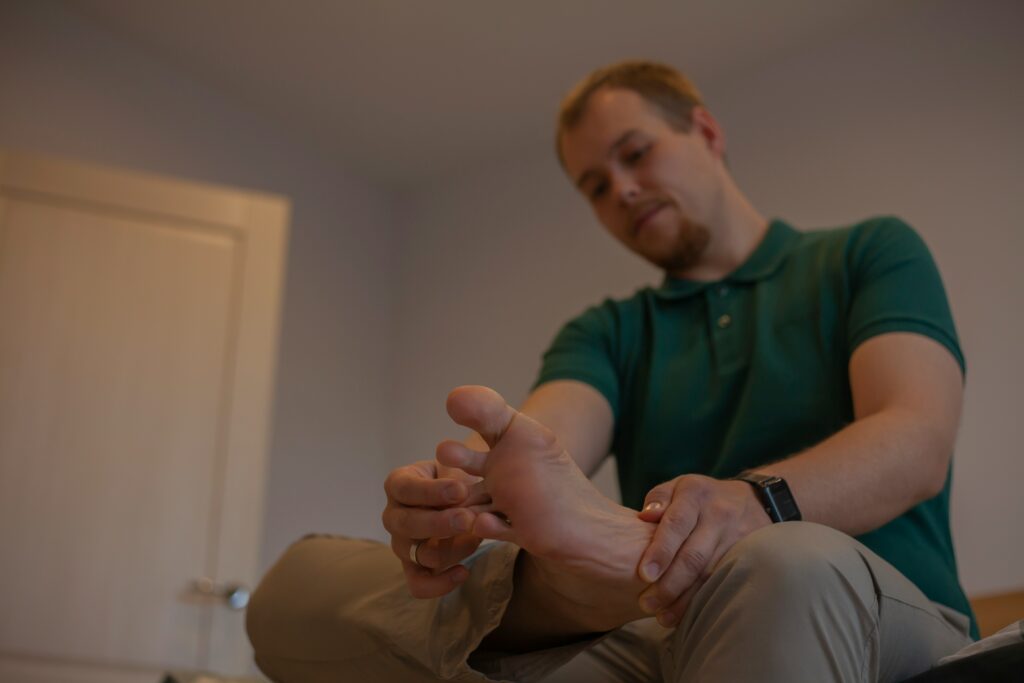
A healthcare provider often can make a diagnosis of tailor’s bunions during a physical examination of the foot.
As part of the examination, the provider may assess the following:
- The prominence of the bump
- The alignment of the foot
- How well the affected joint can move
- The degree of inflammation and/or soreness
- Gait analysis (how someone walks)
The provider also may request imaging tests, such as X-rays, to evaluate the position of the bones and determine the extent of displacement of the fifth metatarsal.
This helps the provider decide on the best course of treatment to manage the condition effectively.
Non-Surgical Treatment Options for Tailor’s Bunion
Most cases of tailor’s bunions are successfully treated nonsurgically if the condition is addressed promptly.
Footwear Modification
A shoe with a wide toe box helps relieve pressure on the affected joint. The shoes should also have enough room so the toes are not crowded. This helps prevent further irritation.
Use Padding
This is usually soft material such as moleskin. Padding helps reduce pressure or friction from the shoe on the outgrowth.
Ice Therapy
A cold pack or ice cube wrapped in a thin towel can help reduce swelling and discomfort. The ice should be applied to the sore area for 10-15 minutes at a time.
Medications
Mild analgesics can help reduce the pain and inflammation. They should be taken as directed on the label or by a medical professional.
Exercises
Stretching and strengthening foot exercises help the foot retain its normal shape and range of motion.
When Is Surgery Needed?
Surgery usually involves removing the tailor’s bunion in cases where non-surgical treatment cannot reduce the discomfort. The doctor will consider surgery if:
- Pain persists despite a course of non-surgical treatment
- The person is unable to wear the more comfortable shoes
- The deformity continues to progress
- Shoes are still painful even after a period of avoiding uncomfortable footwear and using other conservative measures
Surgery is generally considered for its ability to restore the normal alignment of the 5th metatarsal, prevent progression of the deformity and alleviate the pain. The type of procedure depends on many factors, including the degree of deformity, foot shape, and overall health of the patient..
How to Prevent Tailor’s Bunion Problems
Even though it is not possible to prevent tailor’s bunions, there still are ways to minimize the appearance and slow down the condition. Some of the things that may help include
- wearing comfortable shoes
- preventing the feet from being deformed
- as well as
- doing regular exercises for the feet
Additionally, people with this problem should rest their feet after prolonged periods of standing. Also, seeing a medical professional about the symptoms on a regular basis is essential. All of the things mentioned above are particularly important for those suffering from tailors’ bunions periodically or with a history of the problem in the family.
Tailor’s Bunion vs Regular Bunion
Although they are similar conditions, the main difference is their location.
A regular bunion develops at the base of the big toe, while a tailor’s bunion develops near the little toe joint.
Both conditions involve changes in bone alignment and may cause:
- Visible bumps
- Shoe discomfort
- Swelling
- Pain with pressure
The treatment approach for both may include footwear changes, symptom management, and surgery in severe cases.
Final Verdict
A tailor’s bunion is a condition where a bump forms on the outside edge of the foot near the little toe. Over time, it can cause uncomfortable symptoms that make walking, exercising, and being active challenging and painful.
Genetics, foot shape, footwear, and overuse all contribute to the formation of tailors bunions. Luckily, most cases can be managed to reduce symptoms and prevent further damage. People with persistent discomfort or severe deformity should seek advice from a medical professional to ensure that they receive the treatment required to address the issue.
In addition, learning about the causes and symptoms of tailors bunions will allow people to take proactive steps to manage their condition.
Frequently Asked Questions
1. Is a tailor’s bunion the same as a regular bunion?
No. Common bunions occur on the big toe and at the metatarsal phalangeal joint. Tailor’s bunions occur on the little toe, at the corresponding bony area.
2. Can a tailor’s bunion go away on its own?
The bump itself rarely goes away, but the symptoms associated with it can be eased by changing footwear.
3. Is it caused by tight shoes?
It may aggravate the situation and put pressure on the growth, but there are other causes such as genetic disposition.
4. When should I see a doctor for a tailor’s bunion?
The deformity can be quite painful, making walking difficult. As an alternative, you could try changing footwear, but if that proves ineffective, you should consult a medical professional.
5. Does a tailor’s bunion always require surgery?
No, it does not. You may have to explore other treatment options first, and in some cases, those may prove sufficient. However, in more severe cases, surgery may be required.