For many people watching the Winter Olympics, skeleton racing looks almost unbelievable. Athletes sprint down an icy track, dive headfirst onto a tiny sled, and travel at speeds that can exceed 80 miles per hour while navigating a series of steep curves and sharp turns. This naturally leads to one of the most common questions spectators ask: how do skeleton athletes steer that thing?
Unlike a car, motorcycle, or bicycle, a skeleton sled has no steering wheel, handlebars, pedals, or visible controls. At first glance, it appears impossible to direct such a small sled with any precision. Yet elite competitors consistently guide their sleds through complex tracks with remarkable accuracy, often finishing within fractions of a second of one another. The answer to how do skeleton athletes steer that thing lies in a combination of body positioning, weight distribution, subtle pressure changes, and years of technical training.
Understanding this process shows that skeleton racing requires far more than courage and speed, much like the other fascinating educational guides and science-based explanations available on Education Anchor.
It is a highly technical sport requiring exceptional body awareness, precise timing, and a deep understanding of how the sled interacts with the ice. This guide explores how do skeleton athletes steer that thing, the science behind sled control, and the techniques that allow athletes to race safely at extraordinary speeds.
What Is Skeleton Racing?
Before answering how do skeleton athletes steer that thing, it helps to understand the Winter Olympic sliding sports and how skeleton differs from the other events.
Of the three Olympic sliding sports (bobsleigh, luge and skeleton), skeleton has an athlete who runs along the side of a small sled and jumps on its back to lie down and slide face first at an incline, not far off the ice surface. That’s when, pulled down only by gravity, the sled will accelerate down an ice chute designed specifically with drops and bends. There are no mechanically operating parts in the skeleton sled the way there is for bobsleigh teams. Steering takes a great bit of body control and with such a closely timed race (measured to the hundredth of a second), any tiny shift could alter the whole outcome.
Why Skeleton Steering Seems Impossible
The question how do skeleton athletes steer that thing is understandable because steering mechanisms simply aren’t visible.
Watching Skeleton In Television It is rare you will see skeleton, as experienced at the sport practice to move extremely sparingly when they complete the slide, instead these athletes move incredibly minimally at the peak speed. Although these tiny adjustments are nearly impossible to see, they help the sled maintain optimal control and speed throughout the course.
This efficiency reduces friction and preserves speed.
Understanding the Skeleton Sled
Learning how do skeleton athletes steer that thing begins with understanding the sled itself.
A skeleton sled is built using a rigid frame with two polished steel runners underneath.
Unlike skis or skates, the runners are not designed to pivot or turn independently.
The sled contains no steering linkage whatsoever.
Instead, the runners maintain continuous contact with the ice while the athlete influences direction by changing how force is distributed across the sled.
Because the equipment is lightweight and highly responsive, even small shifts in body position affect how the sled travels through a curve.
Every movement influences pressure between the runners and the ice.
The Science Behind Steering
Physics plays a central role in explaining how do skeleton athletes steer that thing, especially the principles of gravity, momentum, and inertia that control high-speed motion.
The sled naturally wants to continue moving in a straight line because of inertia.
However, curved sections of the track apply lateral forces that constantly attempt to redirect the sled.
Athletes manipulate these forces using subtle body movements.
By shifting their center of gravity only slightly, they change the pressure applied to different sections of the runners.
This affects how the sled grips the ice and alters its direction without requiring mechanical steering.
The process resembles balancing rather than turning.
Instead of rotating the sled sharply, athletes guide it gradually through carefully controlled pressure changes.
Body Position Is Everything
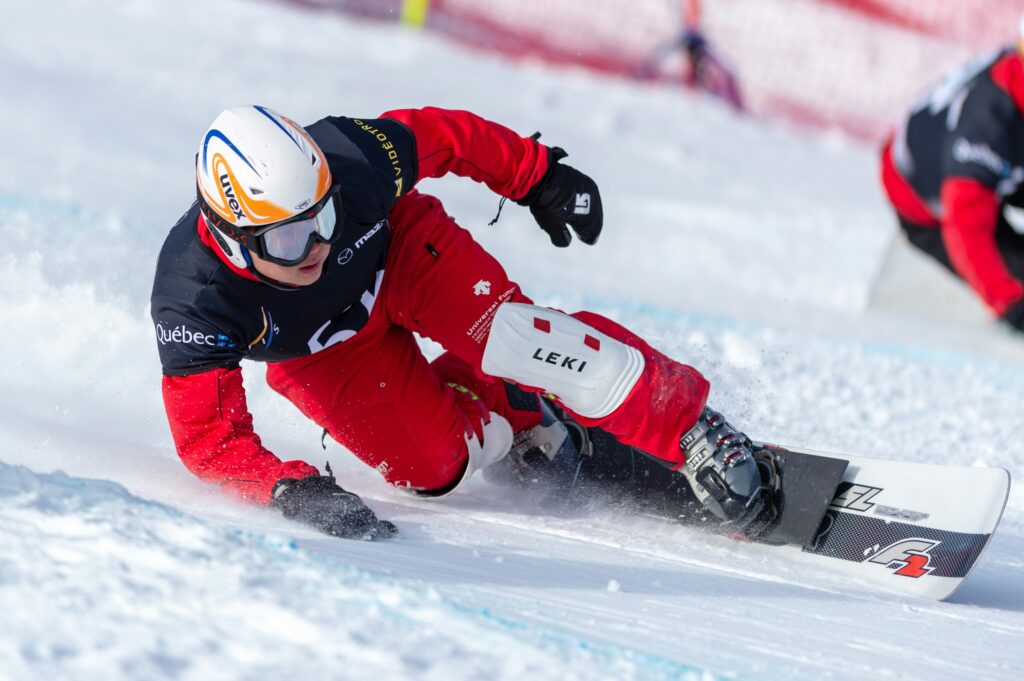
One of the most important answers to how do skeleton athletes steer that thing involves body positioning.
Skeleton athletes maintain an extremely streamlined posture to minimize air resistance.
Their head remains low while their arms stay close to the body.
Although this position appears rigid, athletes continuously make tiny adjustments using their shoulders, knees, hips, feet, and torso.
Moving even a few millimeters can influence the sled’s direction.
Large movements are avoided because they create unnecessary drag and reduce speed.
Elite athletes train for years to develop the ability to control these nearly invisible adjustments consistently.
Weight Shifting Controls Direction
The primary steering technique involves weight shifting.
As athletes enter a curve, they gradually move their body weight toward one side of the sled.
This changes the pressure placed on the runners and encourages the sled to follow the desired path.
The adjustments remain extremely small.
Excessive movement would upset the sled’s balance and create instability.
Understanding how do skeleton athletes steer that thing means recognizing that steering depends on precision rather than force.
The fastest athletes often appear almost perfectly still because they avoid unnecessary corrections.
Using Shoulders, Knees, and Feet
Body weight is not the only steering tool.
Experienced skeleton racers also apply gentle pressure through specific body parts.
The shoulders help influence upper-body balance.
Knees may apply light pressure against the sled.
Feet and toes sometimes contribute subtle directional adjustments by altering overall body tension.
Each movement works together to maintain the optimal racing line.
Although spectators rarely notice these techniques, they form an essential part of how do skeleton athletes steer that thing.
Reading the Ice Track
Steering begins long before the athlete reaches the first corner.
Every skeleton track contains unique curves, banking angles, transitions, and straightaways.
Competitors spend considerable time studying track layouts and memorizing each section before competition.
Knowing exactly where steering adjustments should occur allows athletes to prepare rather than react.
Anticipation is critical because corrections made too late can reduce speed or send the sled off the ideal line.
Understanding track geometry is therefore just as important as learning how do skeleton athletes steer that thing itself.
The Importance of the Racing Line
The racing line is the fastest possible path through the course.
Rather than simply staying in the middle of the track, athletes aim to follow a carefully planned route that minimizes unnecessary steering while maintaining maximum speed.
Following the correct racing line reduces friction, limits energy loss, and allows gravity to accelerate the sled more efficiently.
Small steering mistakes can force the sled higher onto track walls or create extra sliding distance.
Because races are decided by fractions of a second, mastering the racing line becomes one of the biggest factors in competitive success.
Learning how do skeleton athletes steer that thing therefore involves understanding both body control and strategic track navigation.
Fine Steering Adjustments at High Speed
As athletes gain experience, they learn that successful steering is less about making large corrections and more about preventing mistakes before they happen. This is one of the most important concepts behind how do skeleton athletes steer that thing. Every movement must be deliberate because even a slight overcorrection can affect the sled’s speed and stability.
At speeds that may exceed 80 miles per hour (about 130 km/h), the sled reacts almost instantly to changes in body position. Experienced competitors make extremely small adjustments with their shoulders, hips, knees, and feet while keeping the rest of the body as still as possible. These nearly invisible movements allow the sled to remain on the ideal racing line without creating unnecessary friction against the ice.
Elite athletes often describe skeleton as a sport of precision rather than strength. The smallest adjustments, applied at exactly the right moment, usually produce the fastest runs.
Aerodynamics and Steering Work Together
Understanding how to steer this vehicle also involves having an understanding of the basics of aerodynamic physics. Since they are sliding downhill on their head, the way they position themselves and their body has an impact on the air resistance that comes from driving along. Lifting their head too much,or adjusting an arm a little bit too much, will create a drag that slow down their skeleton, and that’s the reason why athletes usually keep a very compressed position. All attempts to turn should try to create the least change possible so to obtain the best position possible and reduce air resistance.
How Skeleton Differs from Luge and Bobsleigh
Many viewers confuse skeleton with the other Olympic sliding sports. Understanding these differences helps answer how do skeleton athletes steer that thing more clearly.
In bobsleigh, athletes ride inside a sled equipped with a mechanical steering system controlled by the driver. The front runners can pivot, allowing direct steering.
In luge, athletes lie on their backs with their feet facing forward. Steering is achieved by applying pressure with the calves and shoulders while making subtle body movements.
In skeleton, competitors lie face down and headfirst. There is no steering wheel or mechanical steering mechanism. Direction is controlled almost entirely through body positioning, weight shifting, and carefully applied pressure against the sled.
Although all three sports rely on gravity, each requires different techniques and skills.
The Role of Experience
People often ask whether learning how do skeleton athletes steer that thing is mainly physical or mental. The answer is that both are equally important.
Experienced athletes spend years developing an understanding of how their sled responds to different movements. They also memorize every section of each competition track through repeated practice.
Before major competitions, athletes complete numerous training runs to study the ice conditions, identify the fastest racing line, and determine exactly where steering adjustments should occur.
This combination of technical knowledge, muscle memory, and decision-making separates elite competitors from beginners.
Common Misconceptions About Skeleton Steering
Several myths surround how do skeleton athletes steer that thing.
A popular myth about the skeleton sled is that the steering mechanism is built into the sled in one form or another. This is because no steering wheels, handle bars, or pedals are found on a race sled; the sled steers only with the body of the athlete. Another myth suggests that the athlete essentially coasts, let-ting the sled go where it wants because gravity does all of the work. In this case, gravity is solely responsible for speed – not direction – the racer steerings the sled and their body throughout the entire course with minute body shifts to guide it, with any small movements having a big, usually negative, effect on speed and ride stability.
Safety in Skeleton Racing
Because skeleton is one of the fastest Winter Olympic sports, safety receives significant attention.
Modern competition tracks are carefully engineered with smooth ice surfaces, protective barriers, and controlled course designs. Athletes wear helmets, aerodynamic racing suits, gloves, and shoes designed to provide grip during the running start.
Training also emphasizes safe steering techniques. Learning how do skeleton athletes steer that thing includes understanding how to recover from small mistakes without making larger corrections that could increase risk.
International governing bodies regularly inspect equipment and competition venues to maintain high safety standards.
Can Beginners Learn Skeleton?
Although skeleton appears intimidating, beginners can learn the fundamentals under professional supervision.
Introductory programs usually begin on shorter sections of the track at much lower speeds. New athletes first practice pushing the sled, mounting it correctly, maintaining body position, and making basic steering adjustments.
As confidence and skill improve, athletes gradually progress to higher starting points and faster runs.
Mastering how do skeleton athletes steer that thing takes time, patience, and consistent practice. Even experienced competitors continue refining their technique throughout their careers.
Expert Perspective
Sports Scientists refer to skeleton as being made up of “ biomechanics , physics and athletics “. There’s no getting round the fact that every steer on skeleton have the potential to impact on pressure, friction, balance and momentum and as the skeleton hits speeds above 80 miles per hour you want to understand how these elements combine at speed. Strength is not at the heart of sport at the cutting edge of competitive sport, efficiency is what these guys are seeking from their equipment.
Smooth steering that allows to conserve speed and momentum and let gravity doing most of the work will ultimately give you a race time with an acceptable margin to some of the competition.
It’s this technical side of skeleton racing that allows us to see that subtle adjustments to the ski geometry and feel, allow our clients to shave precious fractions of a seconds off the competition winning margin.
Conclusion
The question of how skeleton athletes steer that thing has long intrigued winter Olympians because the sled has no apparent steering system. The answer is a phenomenal interplay of body control, balance, physics, and experience. Skeleton athletes guide the sled down the track using minute adjustments in their body – their shoulder, hips, knees, and feet, along with their entire frame.
These slight changes in body position alter the pressure applied to the sled’s runners so the skeleton athlete can follow the fastest racing line through the curves and turns.
There are no steering wheels or other controls in skeleton racing; the track mastery must developed through years of practice. How skeleton athletes steer that thing also speaks to the sheer athletic ability necessary to participate in the sport. In addition to speed and a daring spirit, skeleton racing involves acute concentration and a thorough understanding of the apparatus and the ice surface interaction. The next time you watch skeleton athletes compete in the winter Olympics, take notice of the nearly imperceptible steering adjustments that enable the athletes’ flawless high-speed runs.
Frequently Asked Questions
1. How Is a Skeleton Sled Steered Without a Steering Wheel?
They steer by shifting body weight and applying subtle pressure through their shoulders, knees, feet, and torso, which changes how the sled’s runners interact with the ice.
2. Do skeleton sleds have brakes?
No. Competition skeleton sleds do not have brakes. Athletes slow down naturally after crossing the finish line by allowing the sled to coast into the designated stopping area.
3. How fast do skeleton athletes travel?
During major international competitions, skeleton athletes can exceed 80 miles per hour (130 km/h), depending on the track.
4. Is skeleton more dangerous than luge or bobsleigh?
All sliding sports involve risk, but modern track design, safety equipment, and strict competition standards help reduce those risks. Each discipline presents its own unique challenges.
5. How long does it take to learn skeleton steering?
Basic techniques can be learned during introductory training, but developing the precision required for high-level competition typically takes years of practice.
6. Why do skeleton athletes race headfirst?
The headfirst position creates the traditional skeleton racing style and requires athletes to rely on precise body control for steering while maintaining an aerodynamic posture.